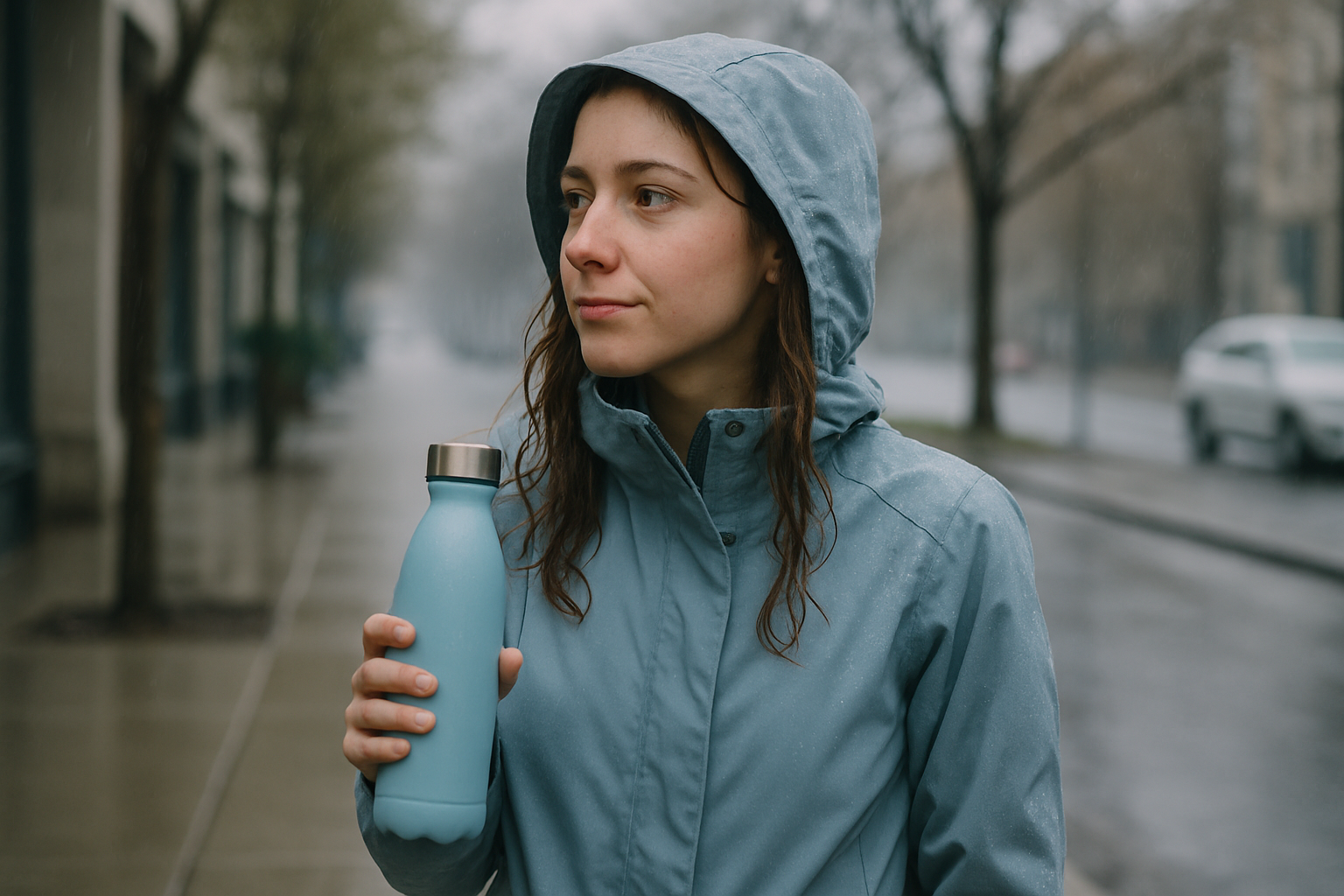
There is something deceptive about rainy spring weather. It makes the day feel slower and softer. You may stay inside more, carry a warm drink longer, and move through work or errands without the obvious body signals that usually remind you to drink water. There is no blazing sun to make you think about it. No long outdoor workout. No heavy sweat. Just a low-key day that seems like it should take care of itself.
That is what makes hydration easier to miss. A rainy day often changes the rhythm you normally rely on. Maybe you do not go for your usual walk. Maybe you skip refilling your bottle because you are not out and about as much. Maybe you settle in at your desk, on the couch, or in the car with coffee and never quite switch back to water. By late afternoon, you feel a little foggy or more tired than expected, and it is only then that you realize you barely drank anything.
Spring is especially good at creating this kind of false comfort. It is not winter anymore, so your routine may already be shifting. But it is also not full summer, so hydration can still feel like something for hotter, more active days. Rain adds one more layer by making the whole day feel quieter and less physically demanding. The result is not dramatic dehydration for most people. It is the much more common version, simple inconsistency. Water stops being automatic.
Why rainy spring days can make hydration easier to forget
It usually is not one big reason. It is several small routine shifts stacking together.
- You feel less thirsty: cooler air and lower activity can make thirst cues feel softer, even though your body still needs steady fluid through the day.
- You stay indoors more: when you are not walking between places, carrying a bottle, or passing the kitchen as often, you lose some natural reminders to drink.
- You default to comfort drinks: coffee, tea, and cozy routines take over the mood of the day, which can make plain water feel easy to delay until later.
- Your errands get compressed: rainy weather often turns the day into quick dashes in and out instead of a more relaxed flow with obvious drink breaks.
- You read low energy as weather instead of hydration: gloomy days can make mild fatigue feel normal, so you may not think to check whether you simply have not had enough water yet.
Why gloomy weather creates a different hydration blind spot
Hot days are obvious. Your body sends louder signals. Rainy days work differently. They create low-grade distraction. You might be focused on getting through a gray morning, managing indoor work, keeping kids entertained, or making quick runs between the car and wherever you need to be. The whole day is organized around comfort and convenience. That mindset is useful, but it also makes simple habits disappear unless they are visible.
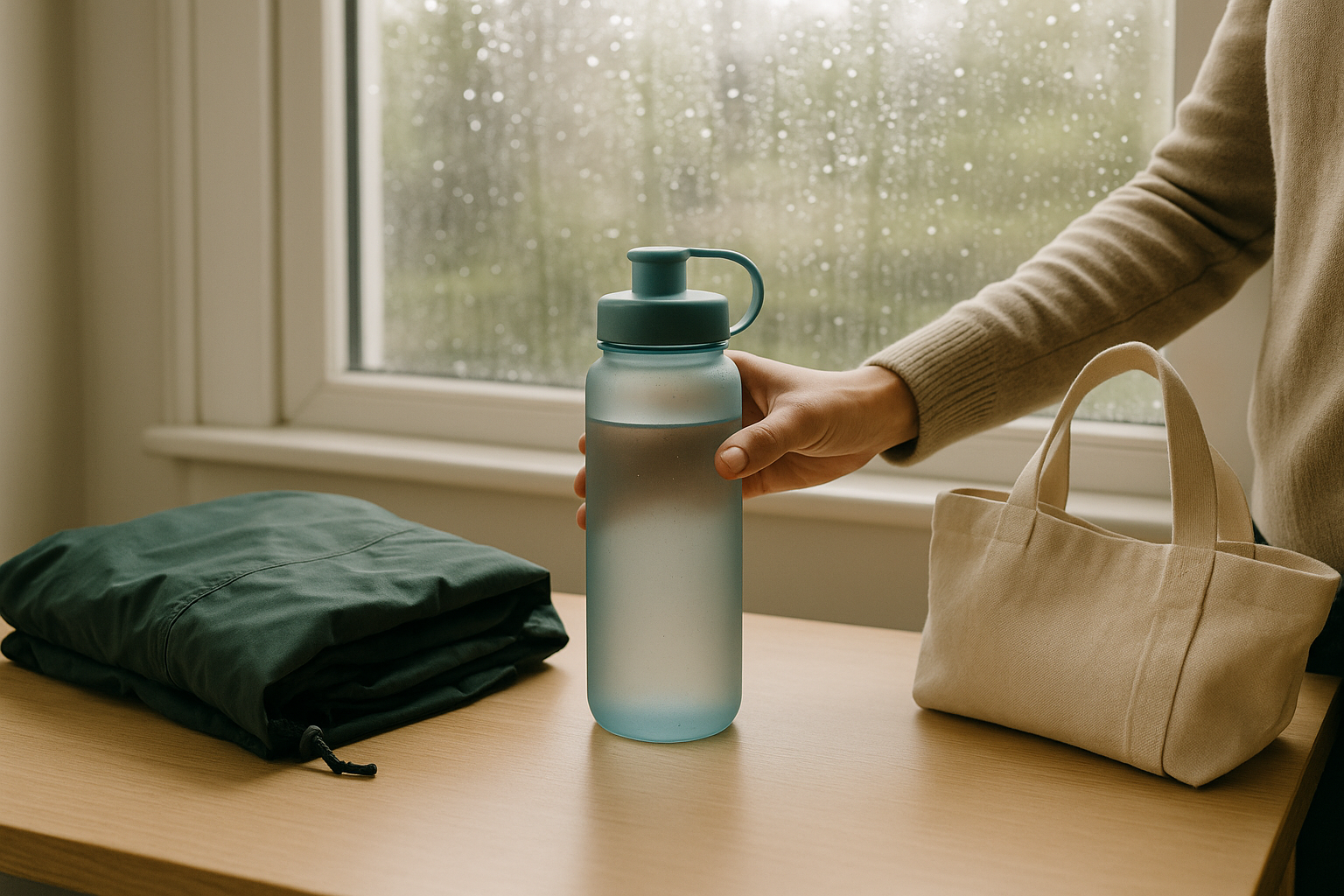
This is why a bottle that is technically nearby is not always enough. If it is in another room, buried in a bag, or empty from yesterday, you will probably not think about it until the day already feels off. Rainy days reward frictionless habits. Water has to be the thing you can reach without thinking, not the thing you plan to get in a minute.
Small signs your rainy day routine may be pushing water behind
You usually do not need a perfect measurement to notice the pattern. A few repeated habits are enough.
- You start with coffee and never switch: one warm drink turns into three, and water never really enters the picture.
- Your bottle stays in another room all day: if you have to remember it, you probably will not.
- You feel oddly sluggish by midafternoon: gray weather can take the blame, but low water intake may be adding to that flat feeling.
- You go longer between meals, breaks, or refill points: indoor days often compress time in a way that makes basic habits blur together.
- You realize most of your drinking happened late: catching up at night is a clue that the day itself never supported the habit very well.
A simple hydration plan for rainy spring days
You do not need a big system. You just need to make water easier than forgetting.
- Fill your bottle before the day settles in: if you wait until work, errands, or couch mode starts, it gets easier to push off.
- Drink water before your second coffee or tea: this is an easy rainy-day checkpoint that keeps comfort drinks from taking over completely.
- Keep water in your line of sight: desk, kitchen counter, entry table, or passenger seat, wherever the day actually happens.
- Use transition moments: take a few sips when you start work, head out into the rain, come back inside, or switch tasks.
- Log while the day is happening: gloomy days blur together fast, so real-time tracking beats trying to reconstruct it later.
What makes this work is that it matches the kind of day rain creates. You are not trying to build a high-performance routine. You are simply protecting one small habit from fading into the background. That is usually enough. When water stays visible and easy, the day feels more stable, even if the weather is not.
Why WaterMinder helps on low-urgency days
WaterMinder is especially useful on the days when hydration feels least dramatic. Rainy spring days are exactly that. Nothing is loudly telling you to drink more water, which means awareness matters more than intensity. Seeing your goal and your progress removes the guesswork. You do not need to wonder if you are probably fine. You can check.
That is helpful when the day feels cozy but scattered. Maybe you are indoors for hours. Maybe you are bouncing between home, work, and short errands. Maybe the weather has your energy a little lower than usual. A gentle reminder and a quick log keep hydration from becoming one more thing that slipped. You are not trying to win a perfect health day. You are just keeping a basic habit steady enough that the weather does not quietly pull it off course.
Keep hydration steady even on gray spring days
Use WaterMinder to track drinks, stay aware of your target, and make rainy-day hydration feel simple instead of easy to overlook.