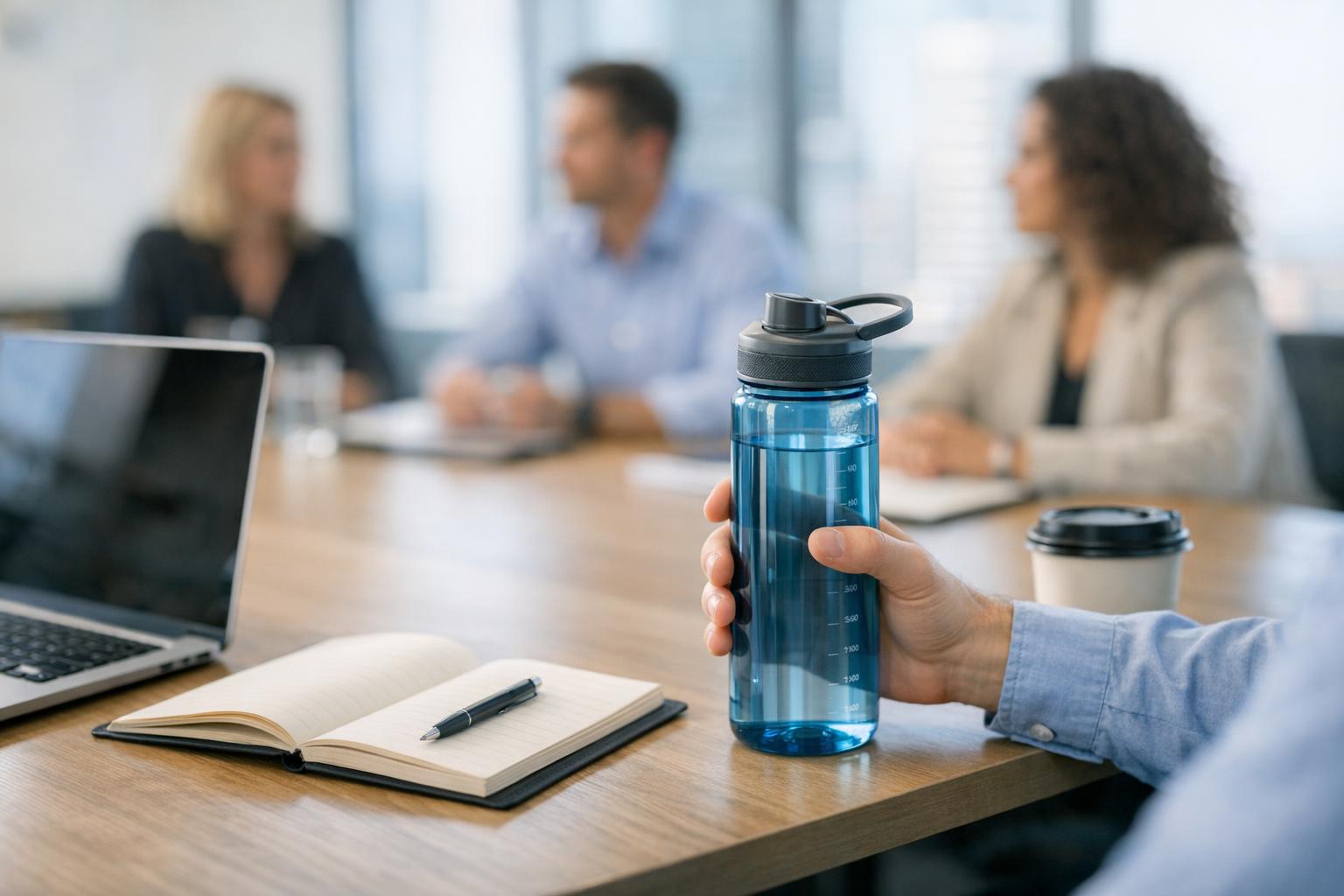
Most people do not plan to ignore water on busy days. It just happens. You jump from one meeting to the next, answer messages in the two-minute gaps, and promise yourself you will refill your bottle after the next call. Then suddenly it is midafternoon and you realize you have been running mostly on coffee and momentum.
That is part of why meeting-heavy workdays can leave you feeling foggy, tired, or oddly irritable. It is not only the mental load. The structure of the day makes it easier to fall behind on hydration without noticing. Unlike hunger, which tends to interrupt you eventually, thirst is easy to brush off when your attention is stuck on other people, screens, and deadlines.
Why meetings quietly break your hydration rhythm
Hydration usually depends on small routines. You sip while checking email. You refill your glass on the way back from the kitchen. You take a short break between blocks of focused work. Meeting-heavy days interrupt all of that. Instead of moving through your own rhythm, you start moving through everyone else's.
Calls also create a strange kind of friction. If your camera is on, you may be less likely to stand up. If you are leading the conversation, you may not want to pause to drink. If the meeting runs long, the next one can start before you have time to reset. None of this feels dramatic in the moment, but it adds up quickly.
There is also a mental side to it. A busy calendar can make you treat hydration like a nice-to-have instead of a basic input. The more crowded the day feels, the easier it is to think of water as something you will deal with later. The problem is that later tends to arrive after the brain fog already has.

Common signs you fell behind without noticing
Meeting-day dehydration usually feels subtle at first. It is not always dramatic thirst. Sometimes it is a dry mouth halfway through a presentation, a headache that shows up after lunch, or that weird feeling where your brain is technically working but not smoothly.
- You finish several meetings and realize your glass is still full: the habit disappeared even though the water was right there.
- You feel more drained after talking all morning: conversation fatigue and hydration gaps can stack on each other.
- Your focus gets brittle in the afternoon: small interruptions feel bigger, and simple tasks feel annoying.
- You are relying on coffee to stay steady: caffeine might help temporarily, but it does not replace building a better hydration rhythm.
- You feel better after a real break and some water: that rebound is often worth paying attention to.
Simple ways to stay hydrated on meeting-heavy days
You do not need an elaborate routine. You need a workday setup that survives a crowded calendar.
- Start before the first call: getting some water in early makes the rest of the day easier.
- Keep a full bottle at your desk: if you have to leave the room to drink, you will probably wait too long.
- Use calendar anchors: take a few sips before your first meeting, after lunch, and after your last afternoon call.
- Refill during meeting transitions: even a short walk to the kitchen can reset your body and your attention.
- Set reminders on the busiest days: reminders work best when the day is too full for memory alone.
- Track what you actually drink: once your intake is visible, it becomes much easier to spot the pattern.
What if your schedule leaves almost no breaks?
If your calendar is truly stacked, the answer is not perfection. It is designing around reality. Keep water within arm's reach. Sip while someone else is talking. Refill at the exact same times each day. Use your first open five minutes after lunch as a reset, not as more inbox time. Tiny habits matter more when the day is crowded.
It also helps to stop thinking of hydration as separate from performance. If a meeting-heavy day demands focus, patience, and clear communication, water supports all of those things. It is not a wellness extra. It is part of how you show up feeling less scattered.
Why tracking works better than hoping you remember
Busy people are usually bad at estimating hydration. The day feels full, so your brain fills in the blanks and assumes you drank more than you did. That is why tracking helps. It replaces vague intention with actual data. If you log your intake and notice that noon arrived with barely anything on the board, you can adjust before the afternoon slide starts.
- Set a reminder for days packed with calls
- Log drinks right away instead of later
- Notice which meeting blocks are most likely to throw you off
- Use patterns from past days to build a smarter routine