
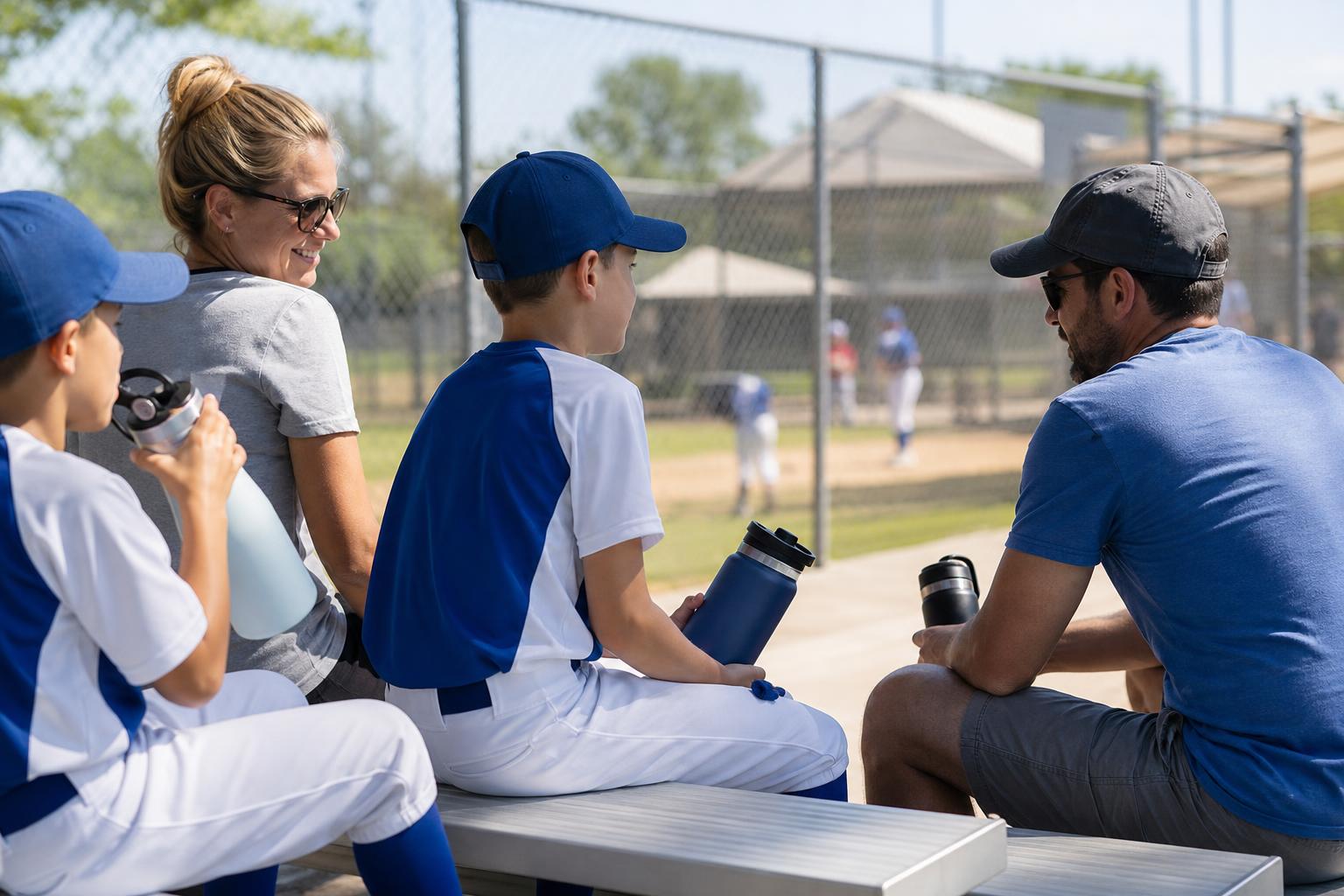
Part of the challenge is that baseball and softball game days are full of attention traps. You are watching the count, listening for lineup changes, checking whether the next game is on time, digging for sunscreen, and making sure everyone has what they need. Even if you packed water, it may stay under a chair or buried in a cooler while the day keeps moving. Because the activity is spread across long stretches of watching rather than one obvious burst of exertion, thirst can feel less urgent than it really is.
There is also the environment. Bleachers and open fields can feel much warmer than expected, especially late morning through midafternoon. Metal seats hold heat. Shade may be limited. Wind can make the day feel pleasant while the sun is still doing plenty of work in the background. Add a sports drink, a coffee, or a snack bar lunch instead of regular water, and it becomes surprisingly easy for the whole family to get home feeling tired, headachy, or flat.
These days often run longer than planned too. Maybe the game starts late. Maybe there are back-to-back games. Maybe you stay to watch a sibling play or chat with other families after the last inning. That kind of schedule drift matters. A one-hour outing can quietly turn into half a day, and hydration falls behind when the plan never adjusted to match what the day actually became.
Why Little League days can quietly raise your fluid needs
Most people do not fall behind because they ignored hydration on purpose. They fall behind because several small habits pile up at once.
- You start early and default to coffee: morning games often begin before your normal routine is fully settled, so coffee happens first and water gets delayed.
- You stay seated in the sun for longer than expected: spectating feels passive, but long sun exposure still changes how you feel and what your body needs.
- You get pulled into family logistics: chairs, snacks, uniforms, sunscreen, and schedule changes can turn simple self-care into an afterthought.
- You rely on concession choices: sports drinks, soda, and salty food can become the default at the field if you did not already build water into the day.
- You keep saying you will drink after the inning: baseball is built on one more inning, one more at-bat, one more quick errand, which makes water easy to postpone.
Why spectators can be just as vulnerable as players
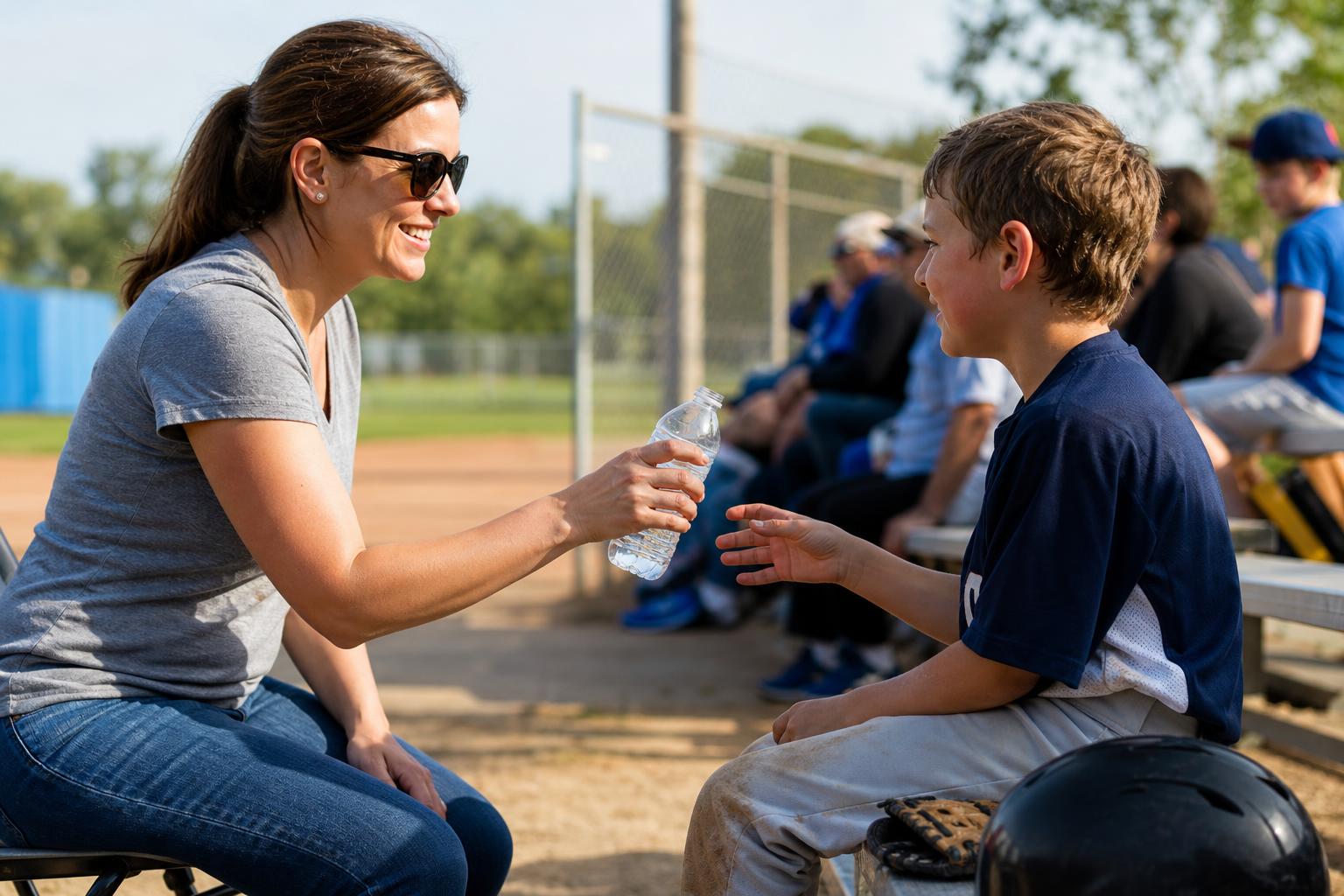
It is easy to focus on pitchers, catchers, and kids running bases, but spectators often sit in the hardest conditions for longer. Players rotate, rest in the dugout, and usually have adults reminding them to drink. Spectators may sit through the whole game, move less, and assume hydration is less important because they are not the ones on the field. That assumption can backfire fast on a bright day with limited shade.
Family sports days also create weird routines around food and timing. Lunch might be fries and a hot dog between innings. You may not want to lose your seat or miss a big play by heading to the refill station. A sibling's game across the complex might start right after this one ends. None of those choices sounds dramatic, but together they create the kind of long, distracted stretch where water gets pushed aside until the ride home.
Signs your bleacher day is getting ahead of your hydration
You do not need to wait for a major crash. The earlier clues are usually enough.
- You have been at the complex for hours and mostly had coffee or a sports drink: that is one of the most common ways a game day turns into a sluggish afternoon.
- You feel more tired than the day should justify: if sitting and cheering somehow left you wiped, plain water may be part of the answer.
- You get a mild headache after sitting in the sun: even a pleasant breeze can hide how much exposure you have had.
- Your mouth feels dry but you keep putting water off: when the next inning becomes the next game, the delay keeps growing.
- You cannot remember your last real glass or bottle of water: if the answer is fuzzy, the day probably outran your routine.
A simple hydration plan for Little League days
You do not need a complicated system. A few practical checkpoints usually do the job.
- Drink some water before leaving home: do not let the concession stand set the tone for the whole day.
- Keep a bottle within arm's reach: if you have to dig through bags or coolers, you will drink less often.
- Use inning changes as reminders: a few sips between innings or between games is an easy rhythm to remember.
- Pair snack bar food with water: salty or heavy food is a good cue to check whether hydration is keeping up too.
- Log during the day, not after: a quick WaterMinder check-in while you are still at the field works better than trying to remember the whole day later.
That is where WaterMinder helps. Baseball families are juggling enough already. You do not need another complicated routine. You just need hydration to stay visible while the day fills up with innings, sun, chairs, scorekeeping, and snack runs. A simple reminder can keep water from becoming the thing that only gets attention once everyone already feels wrung out.
Why WaterMinder helps on family sports weekends
Some hydration misses happen on big workout days, but plenty happen on the days that look deceptively ordinary. Ballgames, tournaments, weekend errands, travel days, and long outdoor events all share the same problem: they scatter your attention. WaterMinder gives those days a simple anchor. You can log before first pitch, during a midgame break, and again before heading to the next field or driving home.
If a Little League day is on your calendar, think about water the same way you think about hats, sunscreen, folding chairs, and snacks. It does not need to become a big project. It just needs to stay visible enough that a fun family sports day does not quietly turn into an avoidable energy crash by late afternoon.
Stay ahead on game days, tournaments, and long family outings
Use WaterMinder to keep your water goal visible during bleacher days, park outings, travel days, and any routine where plain water is easy to forget.