
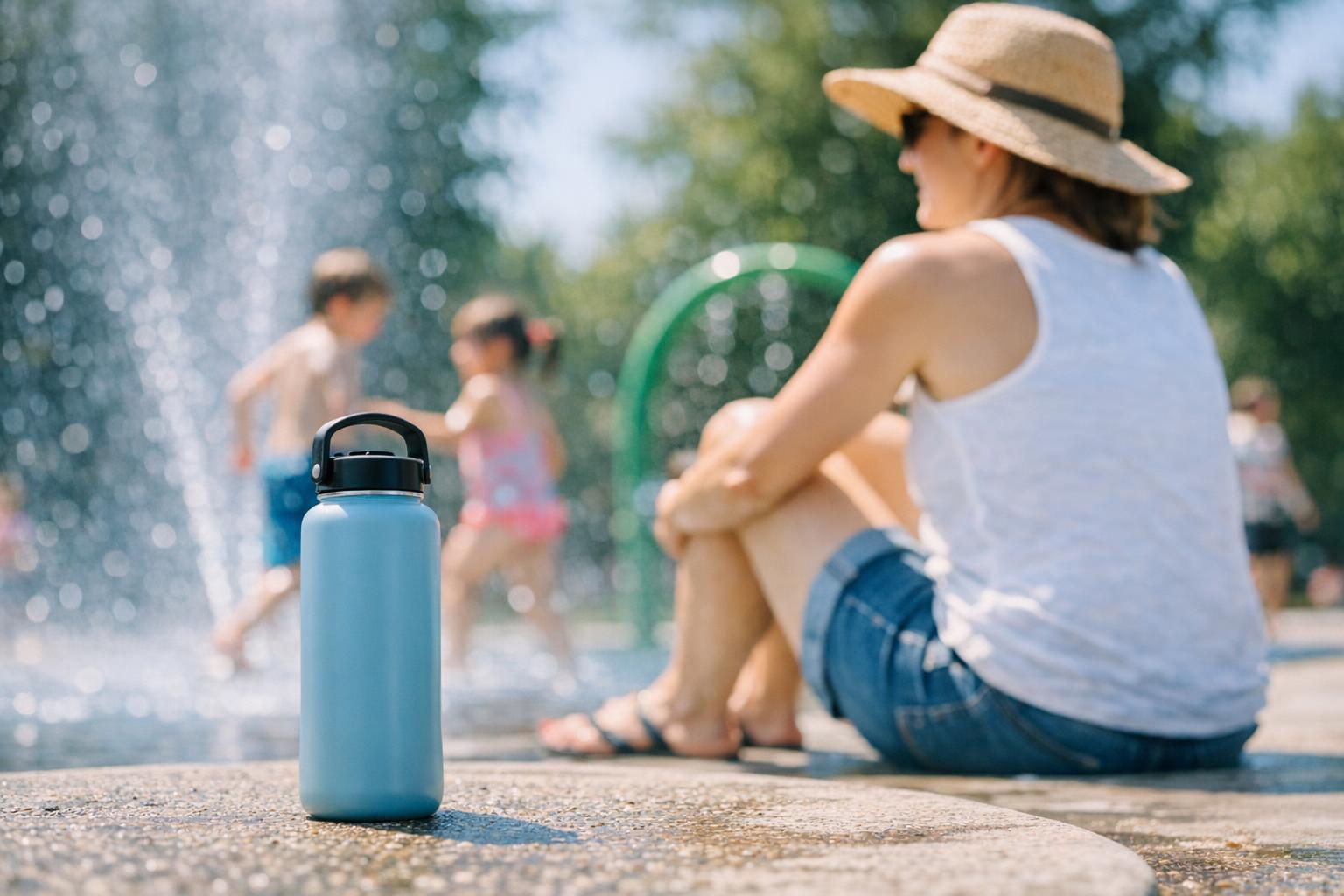
Splash pads are one of those summer outings that seem almost too easy to count as a real day out. You are not packing for a beach trip. You are not driving across town for a major event. You are just heading to a park, letting the kids run through the water, and enjoying a relaxed afternoon. That is exactly why hydration slips through the cracks. The day does not announce itself as demanding, so nobody prepares for the way it quietly stretches out.
But splash pad afternoons usually come with more hydration friction than people expect. There is the walk from the car, then the sunscreen, then the back-and-forth of towels, shoes, snacks, and wet clothes. Adults spend a lot of time supervising instead of sitting still. Kids move nonstop, which means parents are often chasing, lifting, refilling, and answering quick questions instead of thinking about their own bottle. The whole scene feels playful, not strenuous, yet it can still leave you low on water by the time you head home.
Heat matters too, even when the activity looks mild. Pavement reflects warmth, shaded areas fill up fast, and summer air can make thirst feel less obvious until you have already drifted behind. Add salty snacks, coffee on the way out, or a late lunch after the park, and the day can go from "this is easy" to "why do I feel so tired" pretty fast. Wet hands and splashy clothes do not change that basic reality. Being around water is not the same thing as drinking it.
Why splash pad days can quietly throw off hydration
The trickiest part is that splash pad days do not feel structured. There is no clear start, middle, and end the way there is with a workout or a long road trip. You arrive, settle in, and the afternoon unfolds in little pieces. That makes it easy to think, "I will drink in a minute," and then lose the minute to another round of running through sprinklers or helping a kid with sandals.
That loose structure is exactly what makes hydration fade. When an afternoon is built out of tiny interruptions, water never becomes the main event. You might have a bottle nearby, but if it is in a stroller pocket, under a towel, or left by a bench, it is easy to keep walking past it. By the time you notice, you are already thirsty enough to feel behind, and the day is still not over.
Parents usually feel it first because they are the ones solving all the little problems. The child who slipped in the spray zone. The towel that wandered off. The snack that opened early. The shoes that need to be found before leaving. None of those moments seem like hydration moments, but they all add friction. When the day is that fragmented, your own water habit has to work a lot harder to stay visible.
Signs a splash pad afternoon is pushing you behind
The warning signs are usually subtle until they are not. You may not feel "dehydrated" in some dramatic way. Instead, the clues show up as a little less energy, a little more thirst, or a mood that feels off by late afternoon.
- You feel wiped out after what looked like an easy outing: a short park trip somehow leaves you feeling more drained than expected.
- You realize you have mostly been sipping kid drinks or coffee: which is not the same thing as steady water intake.
- You get home and suddenly feel very thirsty: that post-outing rush makes the gap obvious.
- You notice a mild headache or fuzzy focus: especially after standing in sun and moving around for a while.
- You try to make up for it all at once at night: which usually means the day got away from you earlier.
A simple hydration plan for splash pad afternoons
You do not need a complicated summer system. A few small habits are enough to keep the day from running away from you.
- Drink before you leave: starting the day already hydrated is much easier than catching up later.
- Bring more water than you think you need: especially if the outing might stretch into lunch or another stop.
- Keep bottles visible: if they live in the open, they get used more often.
- Use play breaks as cues: every towel break, shoe break, or snack break is a built-in reminder.
- Log drinks as you go: when the afternoon is broken into small pieces, tracking keeps the whole day honest.
That last habit matters more than it sounds. Splash pad days are the kind of days that blur together fast. One more round in the spray zone, one more snack, one more photo, and suddenly it is late. Tracking keeps those little drinks from disappearing in the shuffle, which makes it much easier to notice when you are actually staying on track.
Why WaterMinder helps on splash pad days
WaterMinder works well on days like this because it gives you a visible checkpoint in the middle of a very unstructured afternoon. Instead of assuming the water bottle in the car counts, or guessing whether the kids' splash time also covered your hydration, you can see exactly where you are. That matters on low-key days, because low-key is where habits usually get skipped.
If your summer weekends keep turning into park afternoons, splash pad stops, and last-minute errands, reminders help keep the whole day from turning into one long hydration gap. The goal is not to overthink it. The goal is just to make water easy to remember when everything else is loud, wet, and moving fast.
Make summer outings easier on your hydration routine
Use WaterMinder to log drinks, stay consistent, and keep a casual splash pad afternoon from turning into a sneaky low-water day.