
Conference days are built around momentum. You wake up earlier than usual, check the schedule, rush to registration, grab coffee because breakfast is vague, find the first session, squeeze in a quick conversation after it ends, cross the building for the next talk, and promise yourself you will slow down once the day opens up. The problem is that the day often never opens up. There is always another panel, another booth, another person to catch, another meeting, another meal that happens later than planned. Water becomes one of those things you keep meaning to handle after the next thing.
That is why conference hydration is easy to underestimate. A conference does not look like a hike, a workout, or a long outdoor event. But it often includes more walking and more time on your feet than a normal workday, plus hotel sleep, travel disruption, caffeine, dry indoor air, restaurant meals, and the social pressure of always feeling slightly on. Even if the day does not feel physically demanding in an obvious way, it can still leave you feeling surprisingly worn down by late afternoon.
There is also the visibility problem. On ordinary days, hydration is supported by routine. Your normal bottle is on your desk. You know where the kitchen is. You have familiar breaks. At a conference, all of that changes. You may be carrying extra gear, switching rooms every hour, or sitting somewhere you do not want to leave because the session is full. Water stations can be out of the way. Lines can be long. When convenience drops, hydration usually drops with it.
Why conference days quietly raise your fluid needs
Usually it is not one dramatic issue. It is a bunch of small choices and conditions that stack throughout the day.
- You start the day out of rhythm: travel, hotel sleep, and unfamiliar mornings make it easier to skip your normal hydration habits.
- Coffee gets priority: caffeine is often the first thing people actively seek out at conferences, while water stays secondary.
- You walk and stand more than expected: keynote halls, expo floors, networking spaces, and dinner plans can turn into an all-day step count without you thinking much about it.
- Indoor event spaces can feel dry: convention centers and hotel venues are often heavily climate controlled, which can make water easier to forget even while you feel a little off.
- Meals can be salty, fast, or delayed: buffet lunches, restaurant dinners, snacks, and travel food do not automatically come with enough plain water to balance the day.
Why conference schedules make water easy to postpone
Conference culture quietly rewards constant motion. Breaks are not always real breaks. They are often when you try to meet people, answer messages, find a charging outlet, or sprint to the next room before it fills up. Even lunch can become a meeting. In that kind of environment, drinking water can feel like a tiny detail that does not need attention yet. Then several of those tiny delays pile up, and suddenly the whole afternoon feels harder than it should.
There is also a social reason hydration gets missed. People often do not want to interrupt a good conversation, step out of a session, or leave a booth at the wrong moment. When the day feels full of opportunity, basics become negotiable. That is why so many event days end with a headache, dry mouth, low energy, or that strange combination of being both tired and overstimulated. It is not always just the pace of the day. Sometimes the basics were under-supported the whole time.
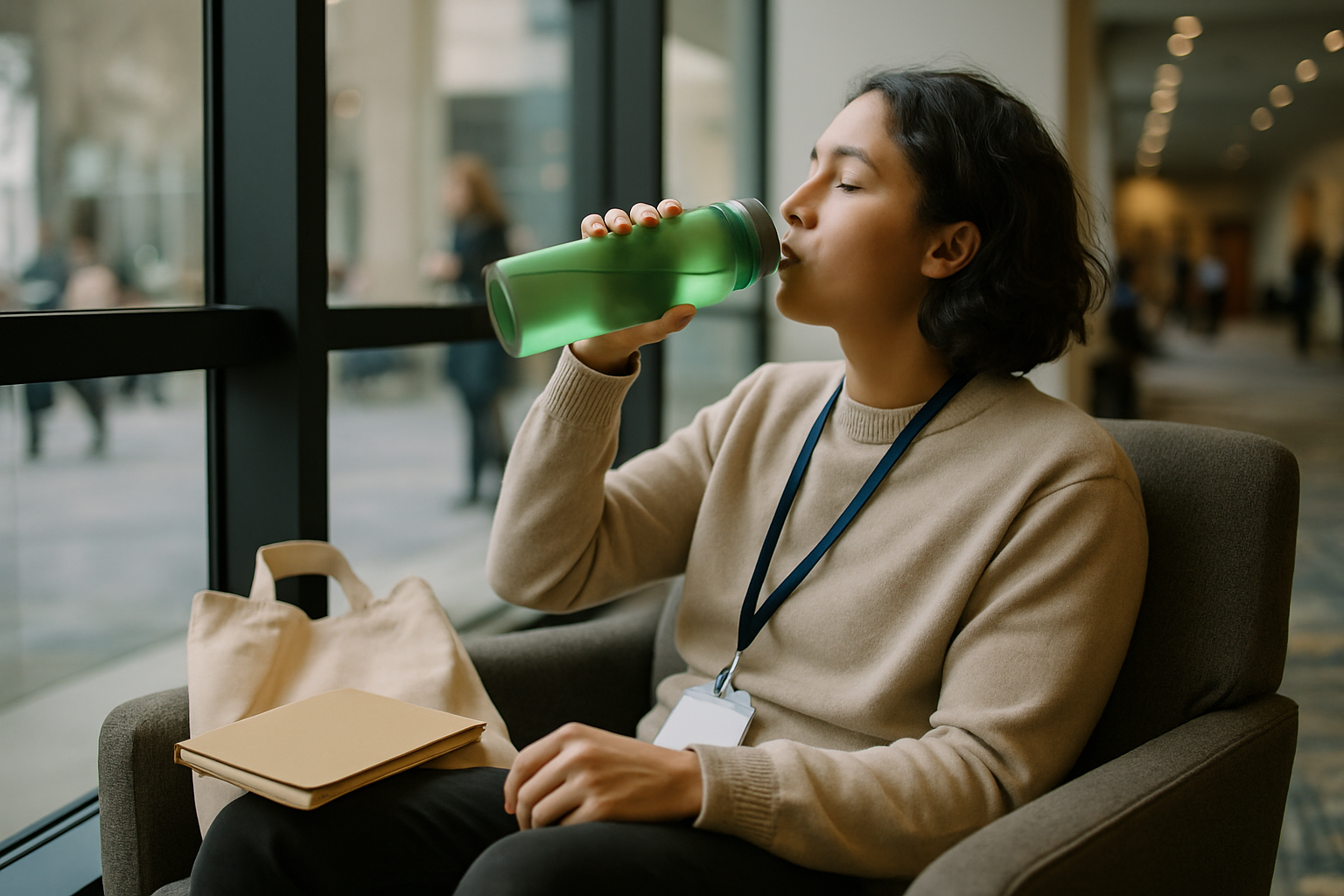
Signs your conference day is getting ahead of your hydration
You do not need to wait until you feel awful. Usually the early clues are enough.
- You have had multiple coffees and almost no water: this is one of the easiest conference-day patterns to miss.
- You feel more drained than the schedule alone seems to explain: a packed day is tiring, but inconsistent fluids can make the drop feel sharper.
- You get a headache during afternoon sessions: the slowdown often shows up once you finally sit still long enough to notice it.
- You are getting foggy in conversations: networking takes energy, and hydration can influence how steady and present you feel.
- You cannot remember your last refill: if it has become a blur, that is usually the signal that the basics slipped too far into the background.
A simple hydration plan for conference days
You do not need a perfect system. You just need one that survives a busy schedule.
- Start before the first session: have water in the morning, not just coffee, so you are not playing catch-up by midmorning.
- Carry a bottle you will actually refill: the easier it is to top off between talks, the more likely you are to stay consistent.
- Use session checkpoints: drink some water after a keynote, before networking, with lunch, and before heading into the late afternoon block.
- Notice the food and caffeine pattern: if the day includes coffee, salty meals, cocktails, or long dinners, water matters even more.
- Log while the day is happening: conference days blur together fast, so quick tracking is easier than trying to reconstruct the day later.
That is where WaterMinder can be especially useful. You do not need to guess whether you are doing fine just because the day is moving fast. A quick glance shows whether water is actually happening or whether the conference schedule has quietly taken over. That kind of visibility is helpful on days when you are trying to show up well, stay focused, and keep your energy from fading halfway through the agenda.
Why WaterMinder helps on event-heavy days
Conference days are exactly the kind of days where routine disappears and awareness matters more. WaterMinder keeps your goal visible even when you are moving between sessions, expo halls, coffee lines, and dinner plans. Instead of waiting until you feel off, you can notice early that the day has become all coffee and logistics, then correct it with something simple and concrete.
If you have a conference coming up, think of hydration like part of your event setup, right alongside your badge, charger, and schedule. Keep it visible, make refills easy, and use the natural transitions in the day to reset. You will still have a full agenda, but you are much more likely to finish the day feeling clear and steady instead of flattened by it.
Stay steady through keynotes, networking, and long venue walks
Use WaterMinder to keep your water goal visible during conferences, work travel, and event days where hydration is easy to postpone.