
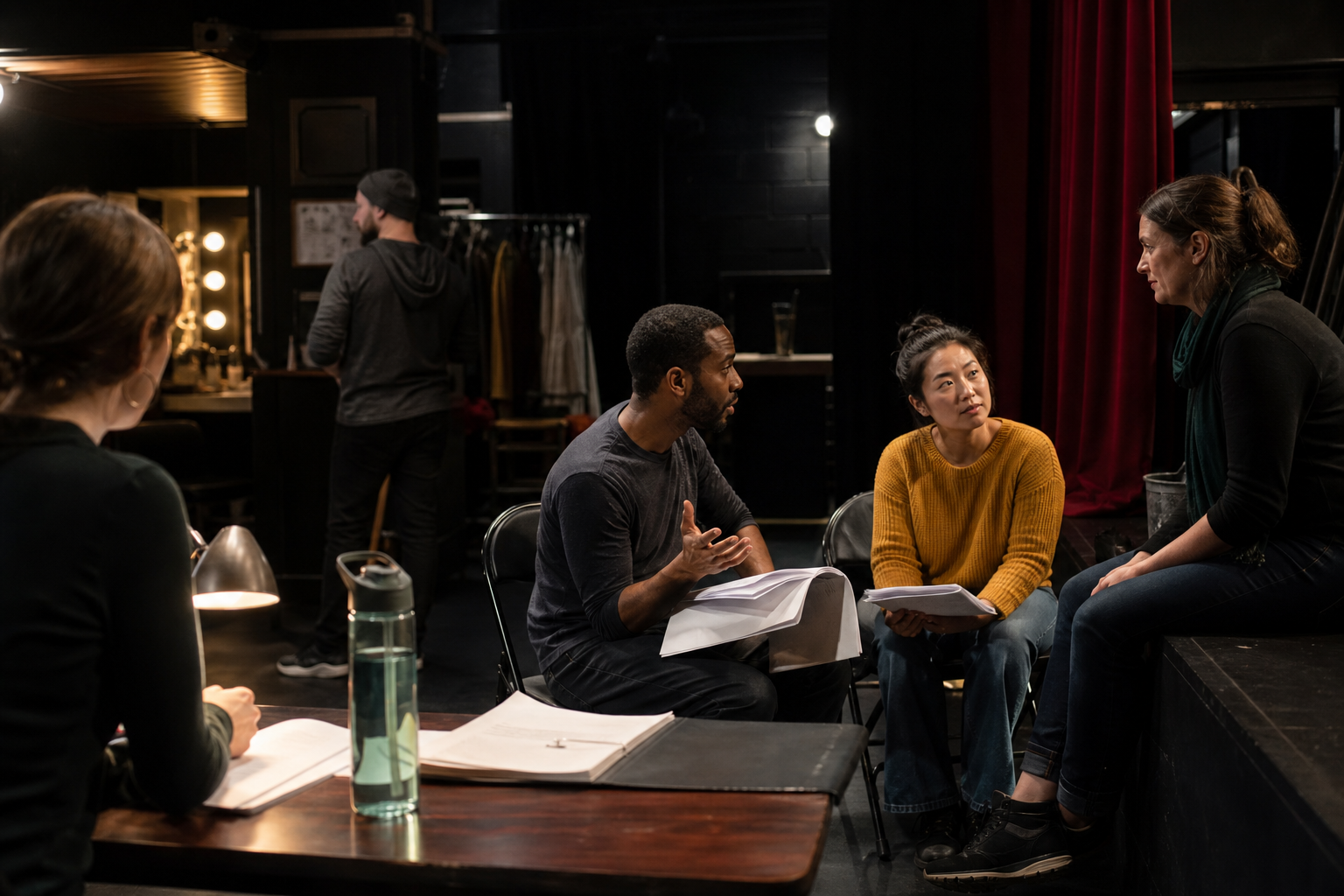
It is easy to think of a rehearsal as mostly sitting and listening. Sometimes it is. But community theater nights usually have more motion than people remember later. You are up, sitting, standing, crossing the room, checking a costume piece, moving a prop, and then getting pulled back in for another scene. None of that feels like exercise in the moment, which is exactly why the hydration cost gets missed.
There is also the timing. Rehearsals often happen after a full workday, which means you may already be low on water before you arrive. Add a coffee, a quick dinner, a warm building, and a long stretch of speaking or singing, and the night can quietly become more demanding than it looked when you put it on the calendar. Water usually gets postponed until the scene break that never feels quite long enough.
That is the tricky part. Community theater is social and creative, so nobody thinks about it like a workout. But your body still notices the standing, the lights, the warm backstage corners, and the extra talking. By the time the cast wraps, the bottle sitting near the wall can feel like an afterthought even though it would have helped all night.
Why rehearsal nights quietly raise your fluid needs
The pattern is simple. A lot of tiny things stack up until the night feels long and dry.
- You arrive already a little behind: a rushed dinner or coffee-first evening means water may not be at the top of the list.
- You spend long stretches on your feet: blocking, scene changes, and set movement all add up.
- Backstage can get warm fast: lights, people, and small rooms make hydration easier to lose track of.
- Talking becomes part of the work: read-throughs, notes, and coaching can dry your mouth more than you expect.
- The night keeps stretching: one more take, one more note, one more adjustment, and suddenly the evening is much longer than planned.
Why the backstage bottle matters more than people think
A lot of rehearsal hydration problems happen because the water bottle is too far away. If it is in the car, in a bag, or on the other side of the room, you will not think about it during notes or scene work. But if it is right by the script or next to your chair, you are much more likely to grab a sip during the natural pauses that already happen between scenes.
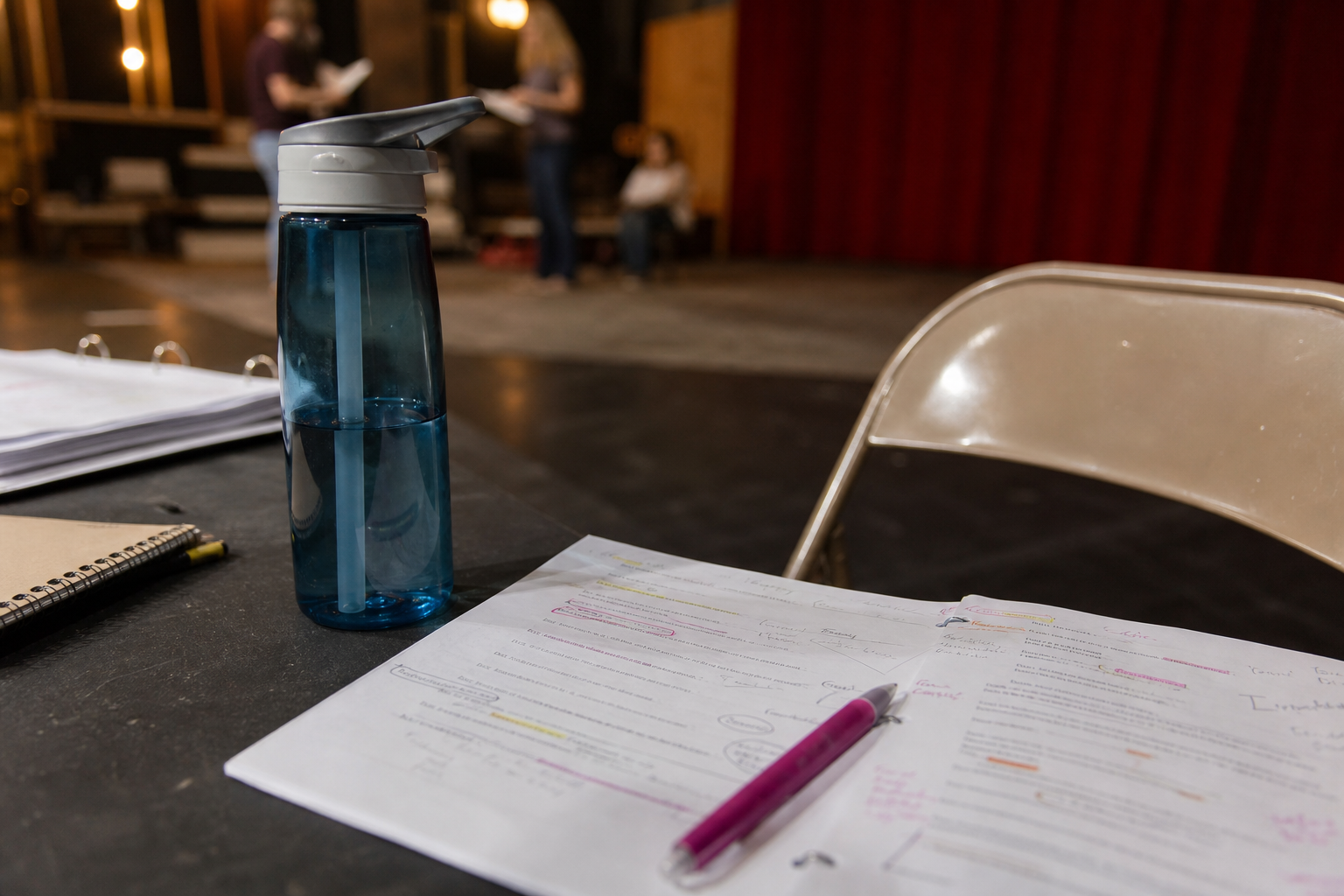
Theater nights also create a weird kind of focus. You are paying attention to lines, cues, blocking, and timing, so the body stuff gets backgrounded. That is normal. It is also why a simple visual reminder helps so much. If the bottle stays visible, hydration stays part of the night instead of disappearing behind the rehearsal.
Signs your rehearsal night is running dry
You do not need to wait for a full crash before making a change.
- Your mouth feels dry during notes: that is often the first clue, not a random annoyance.
- You are more tired than the night should explain: standing and talking may be costing more than you thought.
- You keep thinking about water but never quite get to it: that is usually a sign to make it visible.
- You want a huge drink when rehearsal ends: the evening probably ran longer and drier than your body liked.
- You cannot remember your last sip: when the answer is fuzzy, the night probably needed a checkpoint.
A simple hydration plan for rehearsal nights
You do not need a complicated routine. Just make water easy to see and easy to reach.
- Drink before you leave home: do not start the night already behind.
- Bring a bottle into the room: leave it by your script, chair, or costume bag.
- Sip during scene changes: those natural pauses are the best reminder you will get.
- Refill before the final run: the last stretch is usually the longest.
- Log it while the night is fresh: WaterMinder makes the pattern obvious next rehearsal night.
That is where WaterMinder helps. Community theater rehearsal nights are easy to underestimate because they feel creative and social, not sweaty. But the standing, talking, and warm backstage environment still create a real hydration gap. WaterMinder keeps the water goal visible so a long evening of run-throughs does not quietly turn into a dry one.
Why WaterMinder helps on evenings that feel casual
Some of the sneakiest hydration misses happen on nights that feel productive but not physical. Theater rehearsal fits that pattern perfectly. It is not a gym night, so water slips out of mind. It is not a dinner out, so nobody thinks about pacing. It is just a long, useful evening that can quietly run dry if you never give hydration a place in the routine.
If rehearsal nights are part of your week, treat water like part of the script. Keep it visible, sip between scenes, and let WaterMinder handle the reminder so your attention can stay on the stage instead of on the dry mouth that shows up afterward.
Stay steady through rehearsals, backstage notes, and late run-throughs
Use WaterMinder to keep your water goal visible during community theater rehearsal nights, performance prep, and any evening where hydration is easy to forget.