
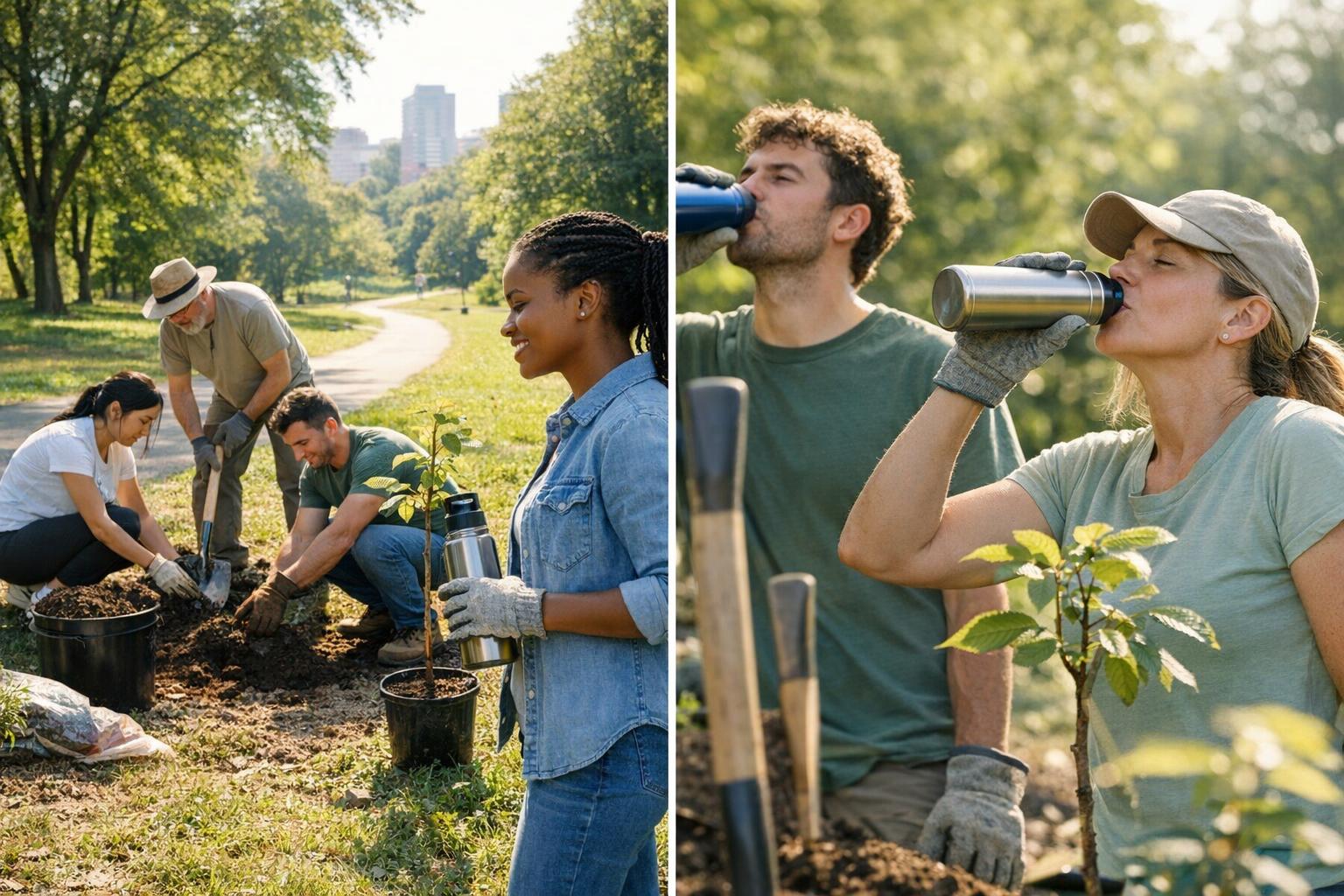
Part of the trick is that tree-planting events do not feel like the kind of activity that should require planning. They are usually framed as community service, a park cleanup, a neighborhood beautification day, or a school or nonprofit volunteer morning. The mood is upbeat and low pressure. People show up in sneakers, grab a shovel, and work in small groups. It feels more like helping out than exercising. Because of that, it is easy to assume hydration will not need much attention.
But the body does not care whether the work is officially a workout. If you are bending, digging, carrying saplings, hauling mulch, kneeling in soil, and moving between tasks for a couple of hours, fluid needs can add up quickly. Add in an early wake-up, coffee before arrival, and a bit of sun or wind, and you have a morning where thirst might stay quiet while hydration falls behind in the background.
The other reason these mornings catch people off guard is that they rarely end when the last tree goes in the ground. There is usually a cleanup stretch, a few group photos, thanks from the organizers, maybe a snack table, and then the normal life stuff that comes after. Someone needs to buy lunch. Someone else remembers groceries. You might head home dirty, a little warm, and surprised that a productive volunteer event somehow turned into half the day.
Why volunteer tree-planting mornings can quietly raise your fluid needs
Most people do not fall behind because the event is extreme. They fall behind because a lot of small things make water easy to postpone.
- You start earlier than a normal weekend: one skipped glass at home matters more when the day gets active right away.
- You are moving in short, repetitive bursts: digging, lifting, and walking from pile to pile still adds up even if it never feels hard.
- You are outside longer than planned: the morning often stretches as groups finish one plot and move to the next.
- You focus on the task, not your body cues: it is easy to notice the next sapling before you notice you need water.
- The post-event routine keeps rolling: once you are done, coffee, lunch, or errands can push water even farther down the list.
Why the social part of the morning is where hydration slips
Volunteer mornings are designed to feel communal. That is part of what makes them satisfying. You finish a row of trees, talk with the group, compare dirt-covered shoes, and maybe linger because everyone feels good about the work. The problem is that this is often the exact moment people stop treating hydration as urgent. The big effort is over, so the water check gets postponed. In reality, your body may still be warm, your gloves may have kept you from noticing how much you sweated, and the morning may still have a few more active hours left in it.
There is also the little trap of assuming that because the work was meaningful, it somehow does not count the same way as exercise or yard work. But your fluid needs do not care about the label. If the event involved repeated movement, outdoor time, and a longer morning than expected, your hydration still needs a reset. That is especially true if the next stop is brunch, coffee, or a store run where plain water falls off the radar completely.
Signs your tree-planting morning is getting ahead of hydration
You do not need a dramatic crash to notice the problem. The early clues are usually ordinary.
- You had coffee, drove out, and started work without much water: that pattern is common on volunteer mornings that move faster than expected.
- You feel more tired than the task should explain: if a few hours outdoors feel bigger than the job itself, hydration may be part of why.
- You are already thinking about food or errands before water: once the rest of the day takes over, catching up gets easier to forget.
- You get home with a headache or flat energy: that can happen when a long morning never had a real hydration reset.
- You cannot remember what you drank before the event: if the answer is fuzzy, the morning probably started too quickly.
A simple hydration plan for volunteer tree-planting mornings
You do not need a perfect field plan. A few checkpoints are enough.
- Drink water before leaving home: do not let coffee and car time become the real start of your hydration day.
- Bring a bottle and keep it visible: if it is in the car or near the work area, you are more likely to use it.
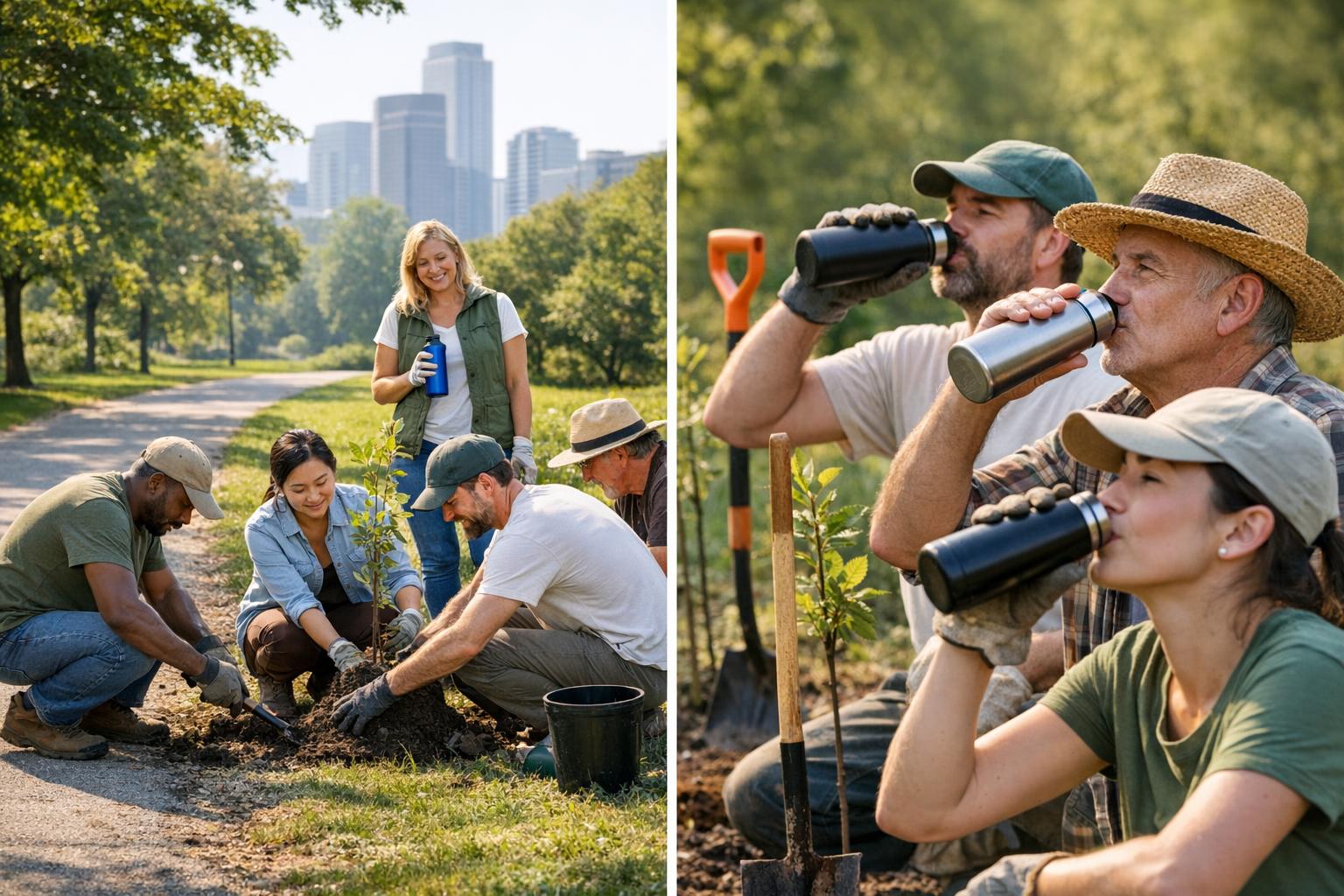
- Take a few sips at every natural pause: glove adjustment, tool swap, or group break are easy cues.
- Log the event while the morning is still fresh: the sooner you record it, the less likely you are to forget how much the morning really used.
- Reset before lunch or errands: a few sips after cleanup can keep the rest of the day from catching up to you later.
That is where WaterMinder helps. Volunteer mornings can feel too ordinary to deserve a strategy, which is exactly why they sneak up on people. WaterMinder gives the morning an easy anchor. You can log before leaving, again during a break, and once more when the cleanup ends and the rest of the day starts.
Why WaterMinder helps on event mornings that feel productive instead of intense
Some of the most common hydration misses happen on days that look harmless: neighborhood projects, charity walks, school events, park cleanups, and volunteer mornings that quietly turn into long outdoor blocks. WaterMinder helps make those days visible. Instead of waiting until you feel off later, you can catch the pattern early and stay steadier through the whole morning.
If you have a tree-planting event coming up, think of water the same way you think of gloves, sunscreen, and a shovel. It does not need to become a whole production. It just needs to stay visible enough that a good community morning does not leave you behind on something as basic as hydration.
Stay steady through volunteer mornings and outdoor work
Use WaterMinder to keep your water goal visible during community projects, park workdays, active weekends, and any routine where hydration is easy to assume instead of track.